Packaging design in communist Europe
- Anna Peneva
- Apr 29, 2025
- 3 min read

Updated: May 2, 2025
Exploring the history of communist Europe reveals fascinating insights into everyday life and consumer culture during a time when choices were often limited. One intriguing aspect that often slips under the radar is the packaging design of the products on the shelves. Whether through the simple and practical packaging or the bright colors that grabbed attention, every item told a story influenced by the social and economic conditions of the era.
Walking through the Varna Retro Museum, I was transported back in time.
The museum opened its doors in 2015 and features one of the largest collections of Eastern Bloc artifacts. Bulgarian cigarettes without filter, Russian vacuum cleaners, household items from Eastern Germany, Polish cosmetics, and some of the most desirable cars produced in the former Comecon turn back the time machine.
What struck me most were the everyday products - objects that might seem mundane at first glance, but which reflect the aesthetics, priorities, and messaging of a system that sought to shape not only society, but even how a bar of soap or a box of biscuits should look.
Packaging in the Eastern Bloc was functional, but never bland.
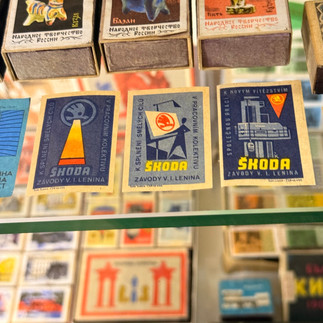
In a world of planned economies and limited competition, packaging wasn’t designed to stand out on a crowded supermarket shelf - it was designed to communicate clarity, utility, and sometimes a surprising dose of national pride. Bold typography, block colours, and geometric shapes were the hallmarks of this visual language. The designs often balanced between minimalism and propaganda, with strong lettering and symbolic motifs that subtly reinforced socialist ideals.


Cigarette packs were a standout example.
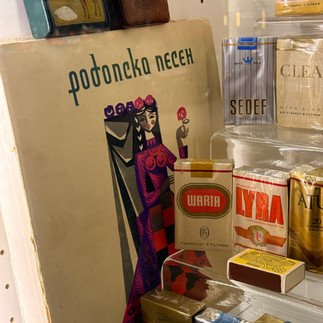
The retro museum offers beautifully preserved examples of Bulgarian and Soviet cigarette brands - often in matte cardboard with rich reds, deep blues or metallic accents. Without flashy logos or Western-style branding, these packages conveyed status through simplicity. Names like "Dunav," "Rila," or "Arda" were paired with stylised fonts and abstract illustrations - small luxuries that hinted at modernity, even as the products themselves were mass-produced and widely available.





Toiletries and cosmetics embraced a different visual rhythm.
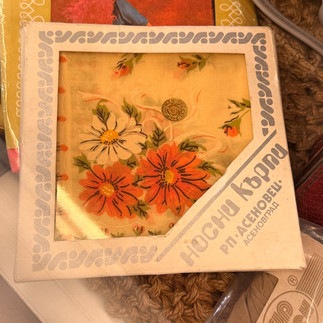
Soap wrappers and perfume bottles, particularly those from Bulgaria and Poland, used florals, soft pastels, or futuristic motifs depending on the decade. What was especially fascinating was how many of these items still aimed to appeal to notions of beauty and aspiration - packaging for hand cream or lipstick might feature elegant illustrations of women or glamorous serif lettering, giving a nod to femininity in a system that promoted collective identity.


Food and drink offered playful or proudly localised designs.
Biscuits in paper sleeves showed cheerful children or country landscapes; tins of coffee and cocoa bore confident labels, often bilingual, reflecting the pan-socialist market across the bloc. Alcohol bottles were especially expressive - vodka, brandy, and even local liqueurs frequently featured embossed glass, elaborate typography, or state emblems, turning every bottle into a patriotic artefact.

Playing cards and entertainment packaging offered a touch of whimsy.
Amidst the utility of daily life, design still found room for imagination. One set of playing cards I saw featured folk motifs, while another used stylised animal illustrations, striking a balance between cultural heritage and mid-century modernism. These graphics were charming, and often handmade - perhaps a subtle act of artistic expression in a tightly controlled media landscape.
I strongly recommend visiting the Varna Retro Museum if you're looking to find nostalgia in a record of a world that operated under different rules, but still aspired to connect, comfort, and impress. The packaging of the communist era may not have aimed to sell in the capitalist sense, but it still managed to speak volumes.
Photo credits: Jazzko on Flickr